
Enter the fireworks city of Sivakasi in Tamil Nadu and you can smell a familiar mix of sulphur, potassium nitrate, aluminium and carbon - familiar because if you've ever burst crackers, say on Diwali or Onam, chances are they were made here. Almost every household used to contribute to India's festive joy by contributing almost 90 per cent of the fireworks made in the country. Before the pandemic, around 300,000 people worked in the industry directly and another 500,000 indirectly. Located 540 kilometres from Chennai, Sivakasi is famous for its fireworks and crackers, along with printing and matches, but is almost a ghost town these days.

The Indian Medical Association states that cases are likely to rise further before coming down in Kerala as about 50 per cent of its population is still susceptible to the virus.

From social engineering to bearing the cost of COVID-19 treatment to financial reconstruction of Tamil Nadu's debt the debutant chief minister is emerging as a leader with a difference, says Shjne Jacob

India's biggest car maker Maruti Suzuki said on Tuesday that its vehicle production in September will tumble by 60 per cent due to chip shortage. The company, which had earlier cut down production at its Gujarat plant, said the chip shortage will hit production in Gurugram and Manesar plants, effectively forcing the automaker to cut production by 60 per cent. Owing to a supply constraint of electronic components due to semiconductor shortage, the company is expecting an adverse impact on vehicle production in September in both Haryana and its contract manufacturing company, Suzuki Motor Gujarat Pvt Ltd. (SMG) in Gujarat.

In a first step towards succession plan, Chennai-based fast-moving consumer goods (FMCG) major CavinKare on Monday announced the restructuring of its businesses and also roped in the generation next giving charges of separate business verticals. Announcing the restructuring on Monday, CK Ranganathan, chairman and managing director of CavinKare indicated that the business will be split into mainly four different streams - FMCG, ecommerce, retail and research and development.

India's first home-grown mapping company MapMyIndia is looking to list in the public market by raising around Rs 1,200 crore at a Rs 6,000-crore valuation. Sources said the company is ready with its draft red herring prospectus documents and is likely to file as early as next week. While the money will be used for business expansion, it will also give MapMyIndia's early investors, including Qualcomm, PhonePe, and Japanese mapmaker Zenrin Co., a chance to exit. The Verma family, which founded the company, will continue to remain promoters.

In a rare face off, captains of the auto industry have hit out at the government for not walking the talk. At an industry event in the capital on Wednesday, R C Bhargava, chairman of India's largest carmaker Maruti Suzuki, and Venu Srinivasan, chairman of TVS Motor, questioned the government's intent to support the auto sector. Revenue secretary Tarun Bajaj sat in the audience listening, before his turn came to counter them.

The central government has agreed in-principle to Air India employees' main demands. It fears an industrial dissension now could impede the process of privatisation. It has agreed to bear the cost of liquidation loss on account of transfer to the Employees' Provident Fund Organisation (EPFO) from company-owned trusts, inclusion of employees in the central government health scheme (CGHS), and encashment of leaves. The template of the Air India process will be followed for other public sector undertakings up for privatisation at a later date.

SpiceJet, India's second-largest private airline, kicked off the process of hiving off its logistics business to its subsidiary SpiceXpress as it looks to raise much-needed capital. On Tuesday, the company sought its shareholders' approval to complete the process and to raise up to Rs 2,500 crore via a qualified institutions placement (QIP). It is in talks with multiple private equity investors as it tries to sell shares in the logistics arm to raise money.
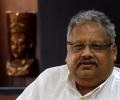
Rakesh Jhunjhunwala-backed new airline Akasa is in talks with US aerospace company Boeing for buying up to 100 737 Max aircraft. Former Jet Airways CEO Vinay Dube and his family members are promoters while ex-IndiGo president Aditya Ghosh is a board member of the airline. The airline is in negotiation with Boeing and has reached out to the government to recertify the aircraft which has been grounded since 2018 after two crashes killing 349 persons, according to sources in the know.
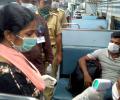
Bad management, an exhausted government vigilance mechanism, delay in roping in private players, relaxing norms, and over-dependence on antigen tests may be the reason behind the surge, reports Shine Jacob.

With growing revenues, a spreading business empire, and surging aspirations, companies are seeing a strong demand for luxury products from Tier 2 and Tier 3 cities.

The government may look at areas around Thonnakkal, in Thiruvananthapuram district, for the facility. If successful, this would be one of the few sites of Sputnik V owned by Russian firms outside that country. Shine Jacob and Sohini Das report.

US tech giant Microsoft is in the final stages of talks with the Telangana government to set up a data centre with a total investment of Rs 15,000 crore. According to sources in the state government, the company has zeroed in on a land parcel near Hyderabad for the facility. "In the information technology (IT) space, Telangana is already seeing some major investments. "Microsoft is establishing its data centre here, and it may come out with a public announcement soon," said a source.

India's largest garment hub Tirupur continues to reel from the effects of the pandemic, with almost 10 per cent of its orders for the upcoming season getting diverted to Bangladesh, Vietnam, Cambodia and China. The sector had seen a drop of about 9 per cent in exports during the first wave, but the impact is likely to be more this time, according to industry experts. Being one of the epicentres of Covid cases in the state, a majority of manufacturing units in the textile belt were closed for almost six weeks during the second wave.

Is there more than meets the eye to Kitex Garments, the world's second-largest children's garment producer, abandoning Kerala for Telangana?
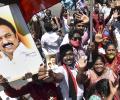
The government of Tamil Nadu on Tuesday signed a memorandum of understanding (MoUs) with 35 companies that may see investment to the tune of Rs 17,141 crore, creating employment opportunities for 55,054 people. The major companies that would be coming up with fresh investments over Rs 1,000 crore in the state include JSW Renew Energy Two, TCS, ZF Wabco and Srivaru Motors among others. JSW Renew Energy Two will be coming up with a 450 megawatt (Mw) wind power generation unit at Tuticorin, Tirunelveli, Dindigul and Tiruppur for Rs 3,000 crore. TCS will be coming up with its third phase of expansion at SIPCOT IT Park in Siruseri, ZF Wabco with an auto component unit at Kancheepuram for Rs 1,800 crore and a two-wheeler EV unit by Srivaru Motors for Rs 1,000 crore at Coimbatore.

Tata Sons has started the process of due diligence of state-owned Air India and its subsidiary Air India Express. Sources said the group has appointed Bain and Company and Seabury Group for this purpose. Once complete, a financial bid will be submitted and a deal to take over the airline is likely to fructify by end of this year or even earlier, people involved in the process said. Simultaneously, the group has brought in veterans in the aviation business from Delta and United Airlines to prepare a plan for post-merger integration of Air India with its existing airline ventures. Tata Sons operates Vistara - a 51:49 percent joint venture with Singapore Airlines and Air Asia India, in which Tatas hold 83.67 per cent stakes.
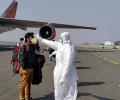
A free and open aviation market, where the government keeps the interest of consumers higher than saving any airline.

The survey covered 1,210 IT executives and technology professionals from North America, the United Kingdom, Australia, New Zealand, Singapore and India. In India, 202 respondents from businesses with more than 500 employees across 18 industry verticals completed the survey. Overall, 89 per cent of the respondents said implementing a work-from-home policy had increased security challenges for their organisations. The risk posed by shadow IT was especially high, with 89 per cent of companies having no control over the software that employees purchase and install on their devices.
 © 2026 Rediff.com - Investor Information - Advertise with us - Disclaimer - Privacy Policy - Sitemap - Feedback - About us - Terms of use - Grievances